
3 AM: An After-Sales Engineer’s Reality
At 3 AM, an overseas service center sends in a case report. An electronic component is misbehaving, and someone needs to determine whether it’s a product-side defect or an integration-side environmental issue. The PDF runs 30 pages — error codes, on-site photos, diagnostic logs. The next morning, the after-sales engineer in the home office spends 40 minutes reading the report, another 30 minutes cross-referencing internal technical documentation, and finally pages through historical case archives. An hour and ten minutes later, the verdict arrives.
Multiply that by 10–20 cases a day. Engineers work overtime at month-end. Judgment quality fluctuates. New hires take six months to become independent. This is the after-sales reality at most electronic component manufacturers.
And it happens to be one of the cleanest fits for AI-powered KPO (AI-augmented Knowledge Process Outsourcing).
Why After-Sales Analysis Is the Sweet Spot for KPO
Three characteristics make after-sales case analysis a natural transition from “full-time engineering work” to “AI + expert tiered workflow”:
1. The knowledge is already structured. Each product line has an error-code list, classification rules, and a historical case archive. The knowledge exists — it’s just scattered across files and only assembles in an experienced engineer’s head. Recombining structured-but-scattered knowledge is exactly what AI agents do well.
2. 80% of cases are repeat patterns. A new engineer needs six months to read cases independently, but 80% of those cases have close analogues in the historical archive. Most of the work is repetitive cross-referencing, not real judgment.
3. Consistency matters more than people realize. The same report can be flagged as “product defect” by Engineer A and “integration issue” by Engineer B — pure noise for quality statistics and warranty policy. AI rules are consistent; human reviewers see only the cases AI flagged with low confidence.
The Four Hidden Costs of the Traditional Model
Putting after-sales analysis entirely on an internal engineering team looks straightforward, but the hidden costs are heavy:
| Cost Type | What It Means |
|---|---|
| Headcount cost | A senior after-sales engineer’s fully loaded cost (salary + benefits + overhead) is USD 60K–90K per year |
| Ramp-up time | New hires need 3–6 months of mentorship before reading cases independently |
| Consistency risk | Different engineers judge edge cases differently, distorting quality metrics and warranty decisions |
| Coverage hours | Overseas customers send cases 24/7, but the internal team only works business hours |
When monthly case volume grows from 50 to 500, the traditional model scales these costs linearly. You don’t solve it by hiring more engineers — you solve it by changing the architecture.
The Two-Tier Architecture of AI KPO
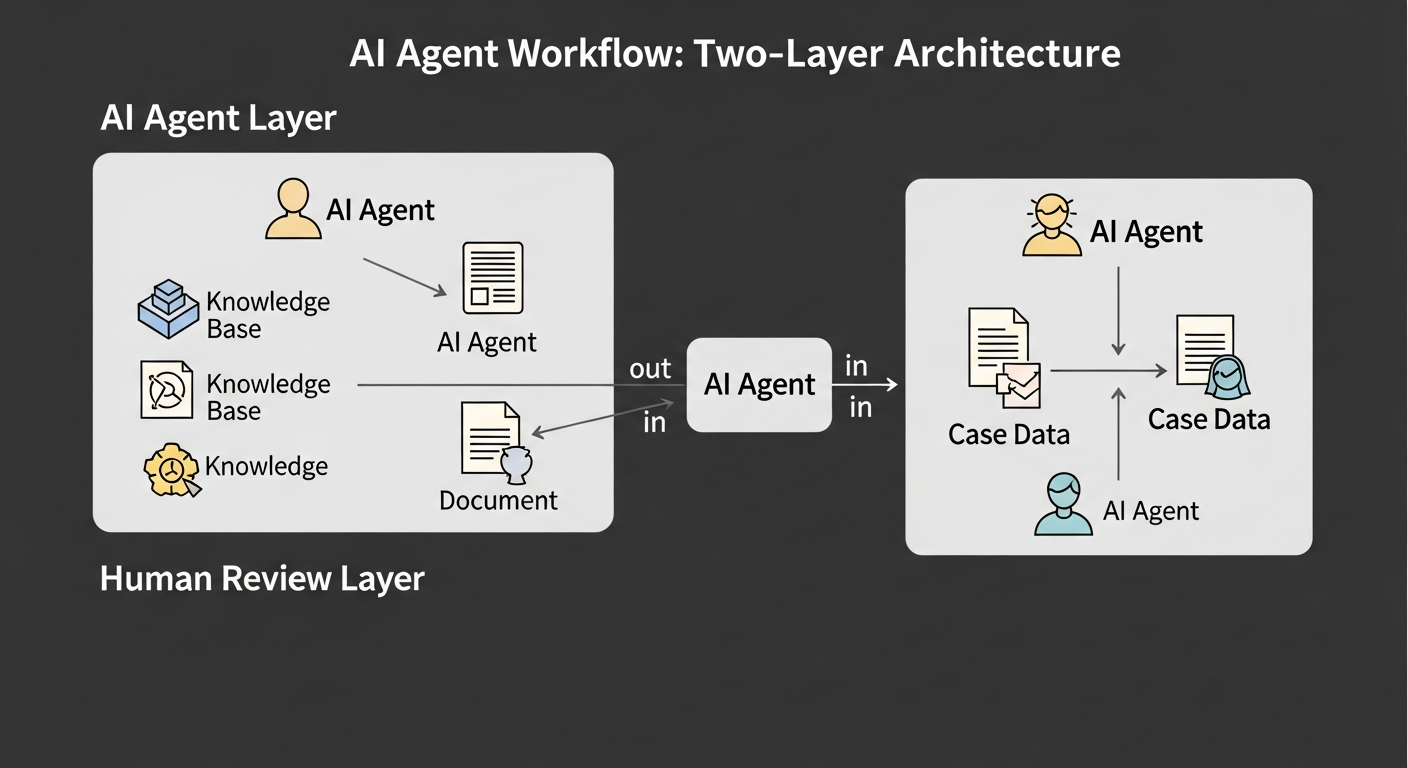
AQUANEST deploys a “AI front-line, expert second-line” model for after-sales scenarios:
Front line: AI agent.
The agent ingests the raw case report, cross-references the manufacturer’s knowledge base (technical docs, classification rules, historical cases), and outputs a structured analysis:
- Case ID, product model, problem summary
- Initial classification (product defect / non-defect / needs more information)
- Reasoning (with citations to specific knowledge-base sections)
- Confidence level (high / medium / low)
- Recommended next steps
End-to-end — from inbox to structured report — typically under 30 seconds.
Second line: senior KPO engineers.
High-confidence cases (~80% of volume) flow directly into downstream processes without human touch. Medium- and low-confidence cases — ambiguous responsibility, anomalous patterns, no historical analogue — auto-escalate to senior KPO engineers for review. Engineers don’t redo the analysis; they verify the edge points on top of the AI’s already-organized report.
The real value of this split isn’t “fewer engineers.” It’s freeing engineers to spend their time where judgment actually matters — rule iteration, complex cases, customer conversations — not reading 30-page PDFs all day.
A Numbers Story (Anonymized)
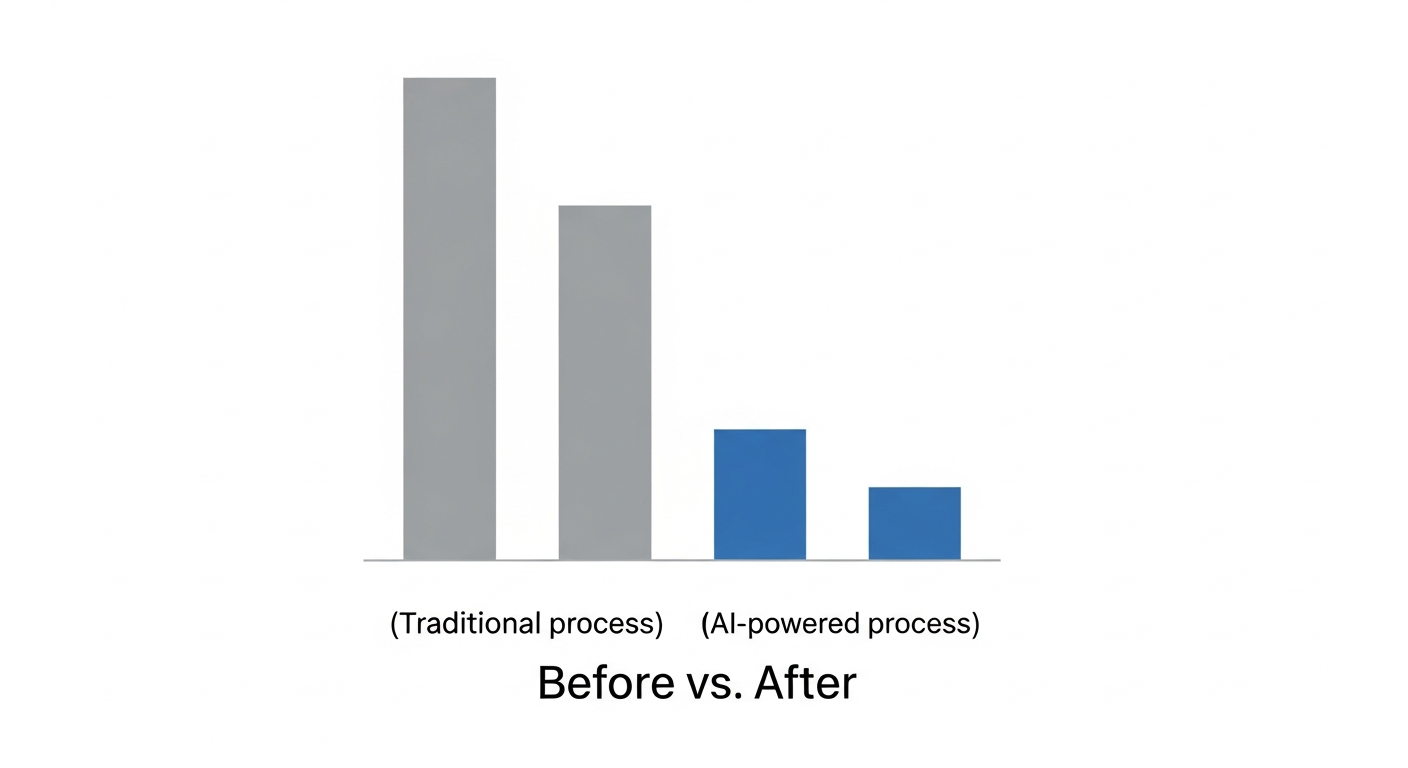
Imagine a mid-sized electronic component manufacturer receiving 200 overseas service-center cases per month:
| Metric | Traditional Model | AI KPO Model |
|---|---|---|
| Avg analysis time per case | 60–90 minutes | 30 seconds (AI) + 10–15 minutes (human review on 20%) |
| Monthly engineer-hours | 200–300 hours | 40–60 hours |
| 24/7 coverage | No | Yes |
| Decision consistency | Engineer-dependent | AI-rule unified |
| Estimated monthly cost | USD 5,000–7,000 (salary + management) | USD 1,500–2,200 |
These aren’t dramatic cost-cutting numbers. They’re the natural outcome of removing repetitive work from engineers’ shoulders and letting people focus on high-value tasks.
AI KPO vs. Traditional KPO / BPO
BPO (Business Process Outsourcing): Hand off the process to an outsourcing firm. Volume-heavy, repetitive, low-decision. Examples: contact centers, data entry.
KPO (Knowledge Process Outsourcing): Hand off knowledge-intensive work that requires professional judgment and insight. Examples: after-sales analysis, market research, software development. See ODC vs KPO vs BPO comparison.
AI KPO: Adds an automation layer on top of traditional KPO. AI handles the repetitive knowledge cross-referencing; humans handle the edge cases that need judgment. AI KPO doesn’t replace KPO — it flattens KPO’s cost curve while improving consistency and coverage.
| Dimension | BPO | KPO | AI KPO |
|---|---|---|---|
| Work type | Repetitive process | Professional judgment | Knowledge matching + judgment |
| Primary executor | Volume staff | Senior experts | AI agent + senior experts |
| Cost-to-scale | Linear | Linear | Approaches constant |
| 24/7 coverage | Per contract | Business hours | Automatic 24/7 |
| Consistency | High | Medium | High |
When Does AI KPO Make Sense?
Not every manufacturer is ready for AI KPO. Three thresholds to check first:
1. Monthly case volume above 50. Below that, automation buildout cost may not pay back. The 50–500 range is the sweet spot.
2. Some form of historical case archive exists. PDFs scattered in folders, Excel sheets, individual engineer notes — all workable. The first step in any AI KPO deployment is consolidating these scattered sources into a queryable knowledge base.
3. After-sales SLA is tight. Overseas customers demanding 24-hour response? Warranty disputes affecting financials? In these contexts, the 24/7 coverage advantage of AI KPO converts directly into commercial value.
If all three apply, an AI KPO deployment typically reaches its first production workflow in 6–8 weeks.
Closing: Keep Engineers on What Humans Do Best
For the past 20 years, after-sales analysis in the electronic component industry has been “engineer + Excel + experience.” AI KPO isn’t trying to replace senior engineers — their product intuition, customer understanding, and edge-case judgment aren’t things AI replaces.
What AI KPO actually solves is keeping senior engineers from being held hostage by the 80% repetitive grind. The 20% of genuinely hard cases — that’s where their time should go.
If your team is hitting the wall — “case volume keeps growing, we can’t hire fast enough” — that’s the signal AI KPO was built for.
Talk to AQUANEST. We design AI KPO after-sales workflows for electronic component manufacturers — from knowledge-base consolidation, to AI agent deployment, to senior-engineer review tiers. First production workflow delivered in 6–8 weeks.
Frequently Asked Questions
What is AI KPO?
AI KPO (AI-powered Knowledge Process Outsourcing) adds an AI automation layer on top of traditional KPO. AI agents handle the first line—structured knowledge matching, document parsing, and classification—while senior engineers handle the second line: edge cases, ambiguous judgments, and client communication. This two-tier model delivers faster response times and higher consistency at a lower cost.
How does AI KPO after-sales analysis work?
When a repair report or RMA case arrives, an AI agent automatically cross-references the internal knowledge base (technical docs, decision rules, historical cases) and generates a structured analysis report within 30 seconds—including initial classification, rationale, and confidence score. High-confidence cases proceed automatically; low-confidence cases escalate to a senior KPO engineer for review.
What types of companies are suitable for AI KPO after-sales?
Electronic component manufacturers and suppliers with more than 50 cases/month, an existing case history (even scattered PDFs or Excel files), and SLA pressure from overseas customers are ideal candidates. The sweet spot is 50–500 cases/month.
How long does it take to implement AI KPO?
AQUANEST delivers the first production AI KPO process in 6–8 weeks, covering knowledge base integration, AI agent deployment, and two-tier review mechanism setup. Contact us at https://aqnest.com/#contact for a free pilot assessment.