
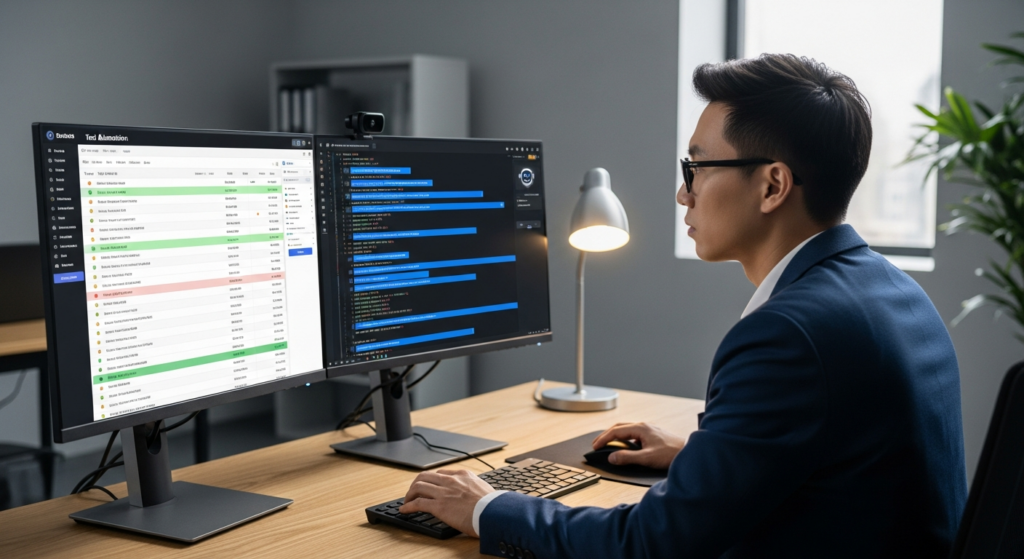
How long does your regression suite take to run — and how much of it does anyone actually trust?
Most software teams end up in the same place: a regression suite that grew for years, one test at a time, until it takes hours to run and nobody remembers what half the tests are actually protecting against. New features ship anyway, because waiting for full regression on every PR isn’t realistic. Coverage quietly erodes.
This isn’t a discipline problem. It’s a throughput problem: writing and maintaining good test cases is slow, manual work, and QA headcount doesn’t scale with the pace code changes.
In 2026, AI-powered QA tooling has matured enough to close a meaningful part of that gap — not by replacing test strategy, but by automating the parts of test creation and maintenance that were always mechanical to begin with.
Why Test Coverage Erodes Faster Than Teams Can Fix It
A few dynamics compound against any team trying to keep regression coverage honest:
- Release cadence outpaces test-writing capacity: weekly or biweekly releases mean new test cases need to exist before the next sprint, not eventually
- Test suites rot silently: as APIs and UI flows change, existing tests either break (and get skipped under deadline pressure) or keep passing for the wrong reason, silently losing their protective value
- Embedded and automotive software adds hardware-in-the-loop complexity: test cases need to account for timing, sensor input variance, and hardware states that don’t exist in typical web QA
- Flaky tests destroy trust in CI: once engineers start ignoring red builds because “that one’s just flaky,” the whole regression gate stops meaning anything
None of this is solved by hiring more manual QA engineers to write more test cases by hand — that just moves the bottleneck without removing it.
What AI-Powered QA Can Reliably Do
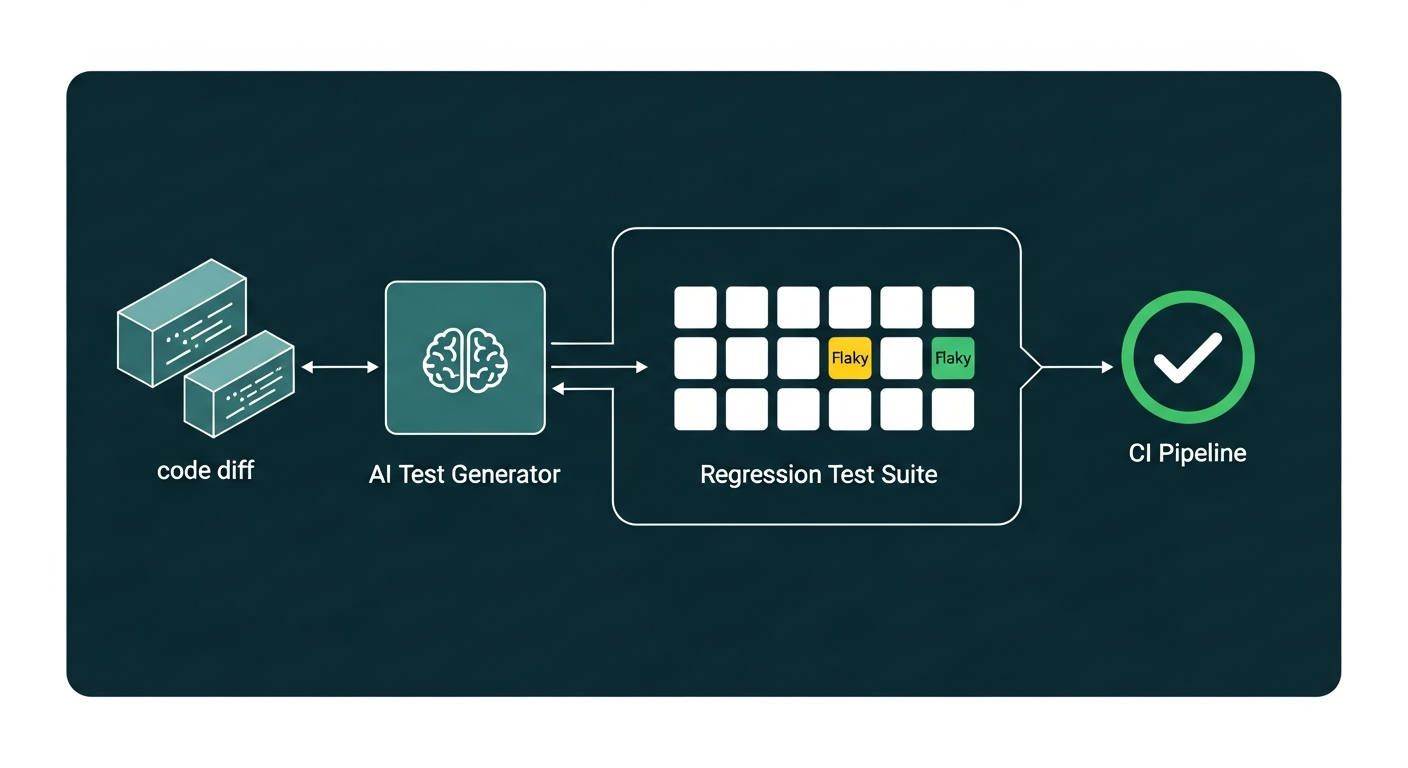
Here’s what AI test tooling can deliver as of 2026, without hand-waving:
1. Test Case Generation From Code Diffs and Specs
Given a PR diff or a functional spec, AI tooling can generate candidate test cases covering the changed logic paths — including edge cases a rushed engineer is likely to skip, like boundary values, null inputs, and error branches.
2. Self-Healing Test Scripts
UI and integration tests that break on minor selector or layout changes are one of the largest sources of maintenance overhead. AI-assisted test frameworks can detect when an element moved or was renamed and update the locator automatically, instead of failing and waiting for a human to notice.
3. Flaky Test Detection and Triage
By analyzing pass/fail history across runs, AI tooling can separate genuinely flaky tests (environment-dependent, timing-sensitive) from tests that are failing for a real reason — and flag which ones are safe to quarantine versus which ones need investigation now.
4. Regression Suite Prioritization
Not every test needs to run on every commit. AI can rank which tests are most likely to catch a regression given the specific code paths a PR touches, letting CI run a fast, targeted subset on every push and the full suite on a schedule.
What AI Cannot Do: Judgment Still Belongs to QA Engineers
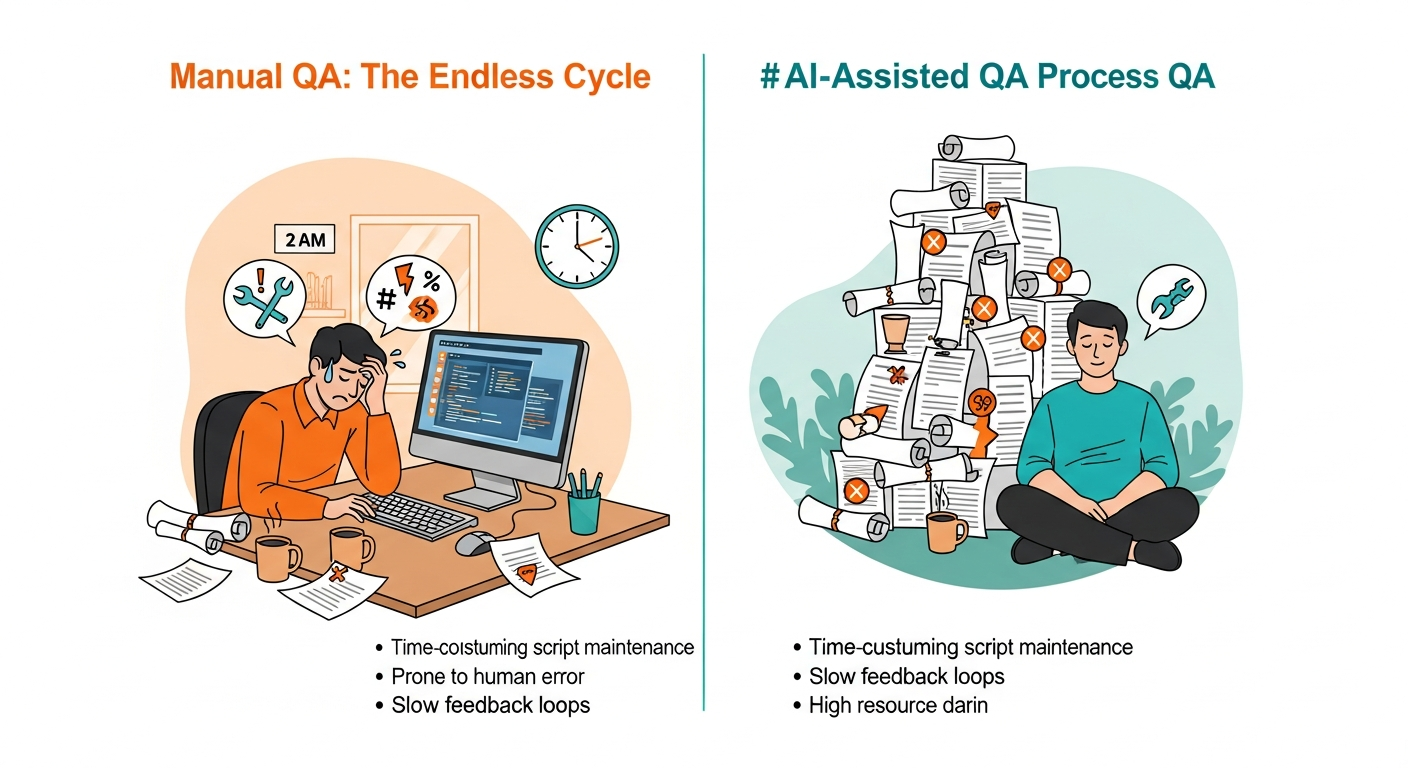
The boundary matters as much here as anywhere else:
- Exploratory testing intuition: knowing where a system is likely to break based on how it was actually built — not just what the spec says — is still a human skill
- Test strategy and risk prioritization: deciding which 20% of functionality deserves 80% of test investment requires understanding business risk, not just code coverage percentages
- Hardware-in-the-loop test design: designing test rigs and fixtures for automotive ECUs or embedded devices requires domain expertise AI doesn’t have
- Safety-critical sign-off: ASIL or IEC 62304 validation evidence still requires a qualified human to review and sign, by regulatory design
The right model is “AI generates and maintains the mechanical layer of testing, QA engineers own strategy and judgment.” That shift moves QA engineers from writing boilerplate test cases to deciding what actually needs testing — a much better use of scarce expertise.
Implementation Path: Where to Start
- Start with a well-understood, stable module: don’t point AI test generation at your most volatile codebase first. Pick something with clear input/output boundaries and measure precision before expanding scope
- Build a triage feedback loop: have QA engineers label AI-generated tests and flaky-test flags as accepted or rejected, and use that signal to tune generation quality
- Integrate into CI as a fast pre-check: run the AI-prioritized subset on every push, full regression on a nightly or pre-release schedule
- Feed real production incidents back in: every escaped bug becomes a new generated regression test, closing the loop between what shipped broken and what gets tested next time
KPO Model: AI-Powered QA as an Outsourced Service
If your team doesn’t have the bandwidth to stand up this pipeline internally, KPO outsourcing is the alternative.
How AQUANEST structures this:
- We build and maintain the AI-assisted test generation and regression pipeline — tool selection, CI integration, flaky-test triage rules
- Senior QA engineers own test strategy and review AI-generated cases for coverage gaps and false confidence
- Weekly reporting: coverage trend, flaky test count, regressions caught before release
- GMT+8 timezone — test failures from your evening release get triaged before your team is back online
The same-timezone model matters more for QA than it looks: when a release-blocking test failure needs a same-day decision on whether to ship, waiting on a 6–8 hour timezone gap is the difference between shipping on schedule and slipping a day.
Further reading: AI Code Review for Embedded Firmware: Senior Eyes Where They Matter Most
Conclusion: Test Coverage Should Scale With Your Codebase, Not Your Headcount
Regression testing has always been necessary and always been underfunded, because writing and maintaining test cases by hand doesn’t scale with how fast software actually changes. AI-powered QA doesn’t remove the need for skilled QA engineers — it removes the mechanical bottleneck that kept them from spending time on the judgment calls that actually protect release quality.
If your team is shipping faster than your regression suite can keep up, or your QA engineers are buried in test maintenance instead of test strategy, AQUANEST can help you build an AI-powered QA pipeline that fits your release cadence.