
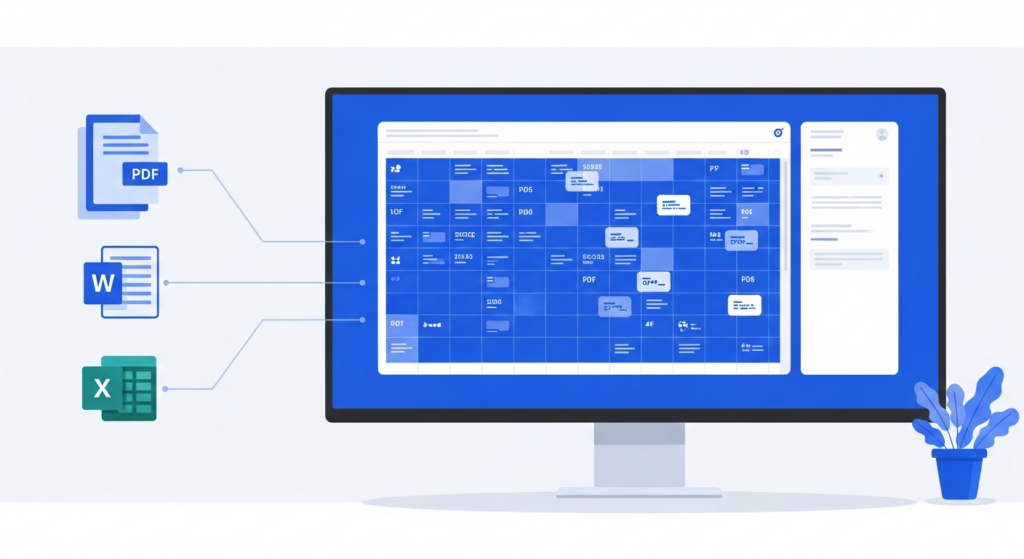
Your sales team receives an RFQ: 32-page PDF, two Excel BOM files, a Word spec sheet. The account manager spends 10 minutes getting to page 8, then forwards to engineering. Half a day later: “Let me take a look.”
This is a daily reality for Taiwan’s manufacturing and system integration sector. A moderately complex RFQ takes 3-4 hours from receipt to initial feasibility verdict. During peak season, 10+ RFQs can arrive in a single day.
AI RFQ analysis changes the starting point. An AI agent parses the documents, classifies technical requirements, and routes the work order in under 30 seconds — freeing engineers to spend their time where judgment actually matters.
Why RFQ Triage Takes 3-4 Hours
The bottleneck isn’t the quote itself — it’s the question “Can we do this, who should evaluate it, and what information is missing?” The traditional workflow:
- Sales receives RFQ (mixed PDF / Word / Excel)
- Manually scans for key specs: CPU model, OS, communication protocols, certification requirements
- Determines technical domain: firmware, software platform, test automation, AI module?
- Routes to the appropriate engineer or PM
- Engineer performs initial feasibility assessment
- Reports back: “Can do / Can’t do / Need more info”
Every step is manual. Every step involves waiting. During peak season, steps 2-5 can span multiple days. The customer follows up twice on LINE; sales can only reply “our engineers are evaluating.”
The core issue: most RFQ initial triage doesn’t require a senior engineer’s judgment — it requires quickly reading documents, matching against a knowledge base, and outputting a structured conclusion. That’s exactly what AI agents do best.
How AI Agents Triage an RFQ in 30 Seconds
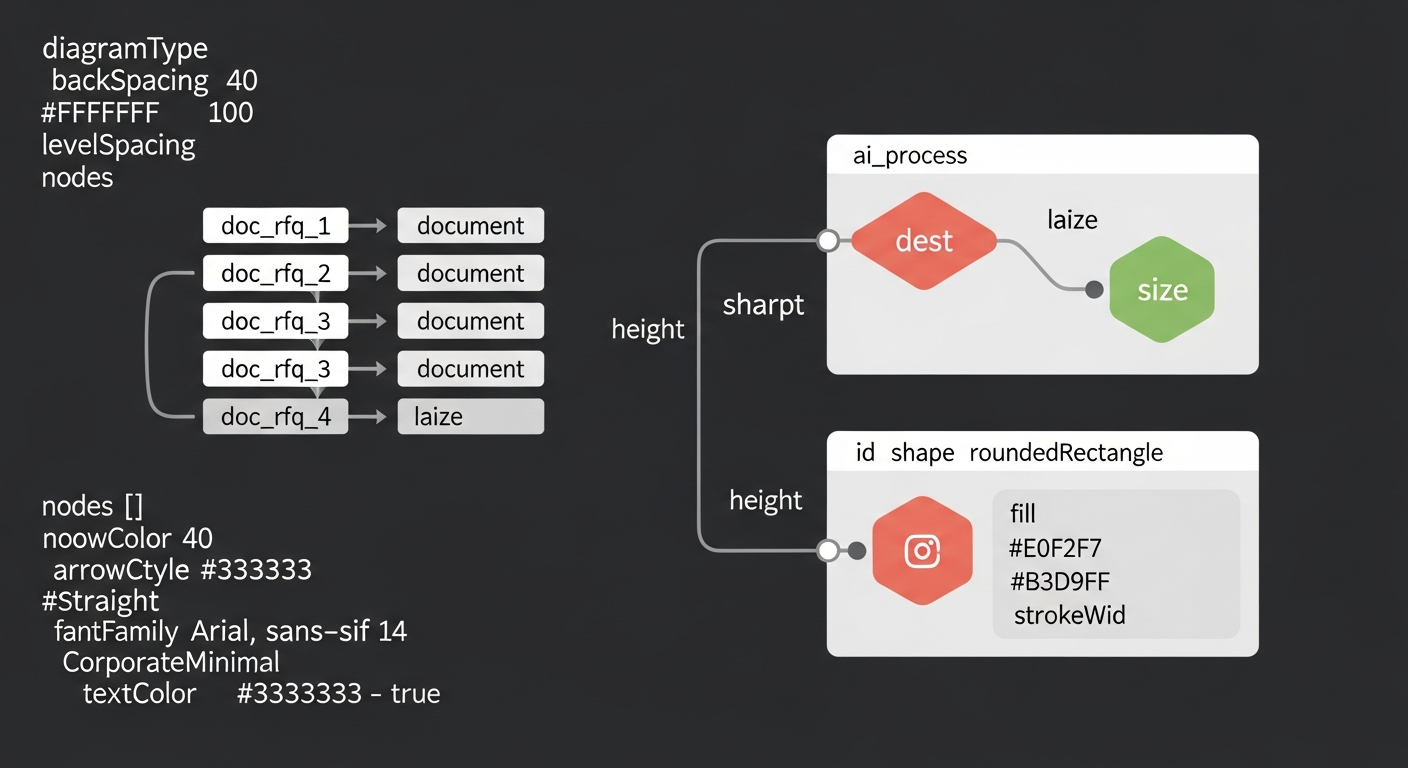
An AI RFQ analysis system executes three sequential actions: parse documents, classify requirements, route the work order.
Step 1: Document Parsing (0-10 seconds)
The AI agent simultaneously processes multiple file formats:
- PDF: Structure recognition — extracts section headings, tables, and technical spec fields
- Word / DOCX: Parses the document tree, preserving formatting semantics (bold = key requirement)
- Excel / XLSX: Identifies BOM lists, component catalogs, spec comparison tables
The output is a structured “requirements summary” — not the raw files, but organized key fields ready for classification.
Step 2: Requirements Classification and Feasibility Screening (10-25 seconds)
The AI agent cross-references your technical capability knowledge base and does three things for each requirement field:
- Domain classification: firmware / Linux BSP / test automation / AI module / communication protocol
- Feasibility flag: Green (full match) / Yellow (partial match, needs verification) / Red (out of scope or requires special certification)
- Missing information flag: Which required fields are blank — auto-generates a “clarification needed” list for the customer
Accuracy depends on knowledge base quality. The first month typically requires engineers to continuously validate outputs, establishing a high-quality classification baseline.
Step 3: Routing to the Right Person (25-30 seconds)
After classification, the AI agent automatically:
- Sends the structured summary to the appropriate technical owner (firmware engineer / software PM / test lead)
- Creates a work order in your internal system (with priority, deadline, and original files attached)
- If information is missing, drafts a clarification email template for sales to review and send
Run your real RFQs through the AI agent for one week and see the classification output before committing.
Book a PoC consultation →
A Real Taiwan Manufacturing Scenario
A Taiwan-based system integrator focused on automotive HMI and industrial control software receives 40-60 RFQs per month, peaking above 80 during Q3/Q4.
Their problem wasn’t inability to quote — it was inconsistent triage quality. Sales staff lacked technical depth, frequently routing ISO 26262-required automotive projects to industrial control engineers, or accepting scopes that exceeded capabilities, only discovering this at the quote stage.
After deploying AI spec analysis:
- Initial classification time: from average 3.5 hours → 30 seconds
- Routing accuracy: from 68% (sales judgment) → 91% (AI classification + engineer confirmation)
- Missing information flagged: average 2.3 blank fields identified per RFQ, clarified upfront — fewer scope disputes post-quote
- Engineer hours saved on initial triage: ~120 hours/month, redirected to technical evaluation and client discussions
The AI agent doesn’t replace engineers’ judgment — it reserves engineers’ time for work that actually requires judgment: complex technical evaluation, in-depth client conversations, pricing strategy.
30-Day ROI Calculator
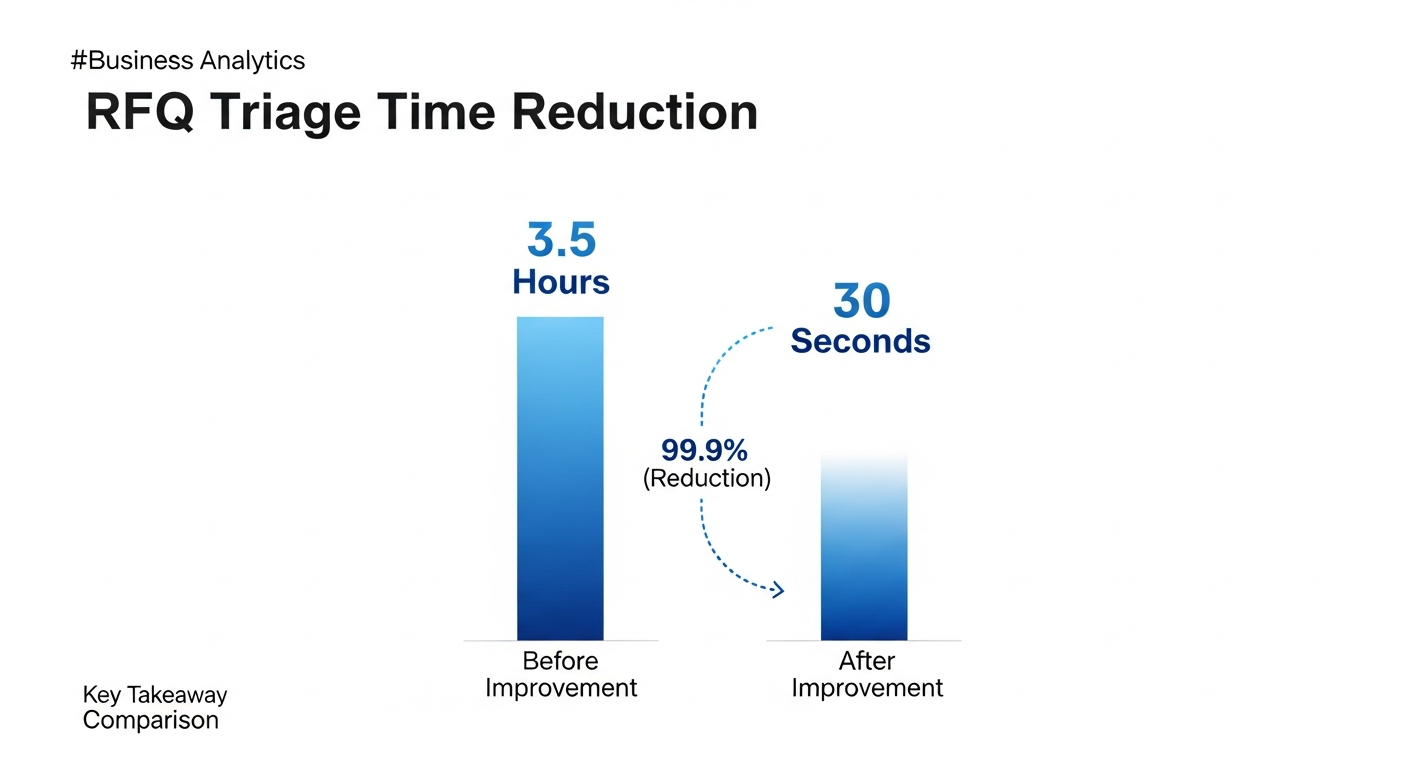
Based on typical numbers for a mid-size Taiwan system integrator — adjust for your situation:
| Metric | Before AI | After AI (Month 2+) |
|---|---|---|
| Time per RFQ triage | 3.5 hours | 0.5 hours (human review of AI output) |
| Monthly RFQ volume | 50 | 50 |
| Total monthly triage hours | 175 hours | 25 hours |
| Hours saved | — | 150 hours/month |
| Engineer hourly rate (USD) | $25 | $25 |
| Monthly labor cost savings | — | $3,750 |
| Mis-routing rework reduction | — | ~$1,000–1,500 |
| Total monthly quantifiable savings | — | $4,750–5,250 |
Month 1 efficiency is approximately 50-60% while the AI classification model is being tuned (engineer validation period). From Month 2 onward with a solid knowledge base, expect the figures above.
AQUANEST’s AI RFQ analysis module is delivered as part of AI KPO services on a monthly subscription basis — no GPU procurement or on-premise infrastructure required. Initial setup (knowledge base creation and agent tuning) typically completes in 3-4 weeks.
When AI RFQ Analysis Works Best
This isn’t a universal solution. The following conditions determine post-deployment ROI:
- ≥20 RFQs/month: Lower volumes extend the payback period too far
- RFQs have consistent formats or fields: Fully unstructured documents (handwritten, scanned legacy drawings) have lower parsing accuracy
- You have (or are willing to build) a technical capability knowledge base: The knowledge base is the AI’s classification foundation — building from scratch takes 2-4 weeks
- Engineers will validate outputs in Month 1: The supervised learning period is critical to accuracy improvement
If your RFQ volume is inconsistent or formats vary widely, start with a hybrid approach — AI handles standard-format RFQs, non-standard formats stay manual, then gradually expand AI coverage.
How AQUANEST Supports AI RFQ Analysis Deployment
AQUANEST’s AI KPO services cover AI agent software development and deployment, including:
- RFQ document parsing module: Supports PDF / Word / Excel with structured output
- Technical capability knowledge base: Built collaboratively with your engineers, covering Taiwan’s automotive, semiconductor, and industrial control software domains
- Work order routing integration: Connects to your existing ERP / CRM / Teams / LINE WORKS
- 30-day PoC: Validate results with your real RFQs before committing to full deployment
For a related AI KPO application in after-sales service, see: AI-Powered After-Sales KPO: How AI Agents Cut Component Case Triage Time by 80%. For AQUANEST’s full KPO service overview: AQUANEST KPO Solutions.
FAQ
Q: How much does AI RFQ analysis cost, and how quickly will I see results?
AQUANEST provides AI RFQ analysis on a monthly subscription basis, including module licensing and maintenance. Most clients see quantifiable time savings starting in Month 2, after the PoC and initial tuning period. Pricing varies by RFQ volume and integration complexity. Contact us for an initial estimate →
Q: Our RFQ formats vary widely. Can AI still handle them?
Yes, but accuracy is lower than with consistent formats. The recommended approach: start with your three most common formats to establish the AI classification baseline, automate those high-frequency cases first, then gradually expand coverage. Handwritten or scanned legacy drawings should stay on the manual processing path.
Q: What if the AI misclassifies an RFQ? Is there business risk?
The AI acts as an initial triage assistant — final quoting decisions remain human-confirmed. By design, all AI outputs include confidence scores. Low-confidence cases automatically escalate to human review. The Month 1 validation period is specifically for establishing this trust baseline.